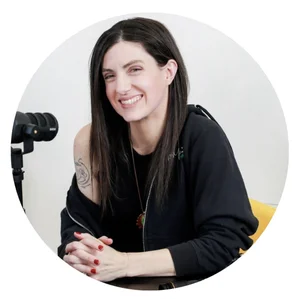
145. MyMaine Birth: Hannah’s Three Birth Stories at Maine Medical Center in Portland
Hannah: 0:00
And my midwife said, she had some very encouraging words. She was like, you know, I can't remember exactly what she said, but the gist was the only way is through it. And I kind of recentered my brain because I was a little bit like not panicking, but a little bit like, ah, I don't know what's going on. And then when I recentered, I was like, okay, the only way to the other side is going through this. So I have to figure out how to try to go through this. And your body just starts pushing, it just starts pushing this baby out, whether you want to or not. And especially with a contraction, I couldn't stop it. It just was like, oh, I could feel the power that came with the contraction. And I knew I wasn't pushing for very long, looking back at the timestamps from when my doula took pictures and the video of him being born. And I knew I wanted to push with my breath. Like I had some pelvic floor issues after my second birth, and I knew I wanted to have some more controlled pushing. I didn't just want to grit and bear it and push really hard and push through it. I wanted to try to push with my breath, push with a contraction. And he was born at 10:15 in the morning. That's when he came out. And I did tell my midwife, I'd like to try to catch this baby. You know, I'd like to, if I'm in a good position, if I feel safe, I'd like to try to catch him. And she knew that. And so from the video, you can see once his head was out enough, like my hands were down there. And I wasn't looking because I was just so focused in my mind. She's like, You got him? And I was like, I got him, I got him, and pulled him up to my chest. And you know, she her hands were right there too. And I remember opening my eyes and I was like, Oh my god, I got him. Like, I did it. And I love watching the video because my facial expression was so animated. I was shocked and surprised. I got him.
Angela: 2:17
I'm Angela. I'm a certified breath photographer, experienced, outward educator, and your coat. As a reminder, after all different types of stories that are split stories of little birds, birth center birds, all different types of home birds, whether a story was positive, negative, or anything else. The only requirement for sharing birth stories on the podcast is that at least one of the birth stories is a both birth stories. All of my podcast guests recipe certificate first and we've got the photos of the second day of your books. I have second stories for my podcast guests, but I've got a little different across the main third screen for us. So if you're interested in joining the community of my authority birth stories on the podcast, you can fill out the forum over on my website, my namebirth.com, or you can always message me over on Instagram at MyNameBirths. If you're pregnant at the end of the coming pregnant, I think it's so important to listen to a variety of different birth stories. So you can start to focus in on what pregnancy and birth path is right for you. Because as I will continue to say over and over again, it does not look the same for everyone. And women are making a wide variety of choices when it comes to their pregnancy and birth. And ultimately, you are the authority on your birth experience. And the choices are up to you. All right. Today's birth story guest is Hannah. And she is here to share her three main birth stories at Maine Medical Center in Portland. Hi Hannah. Welcome to my main birth. Hi. Thank you so much for taking the time to chat with me today.
Hannah: 4:44
You're welcome. I uh I've been listening this whole uh pregnancy for him. I was listening to your podcast episode. So I was like, oh, maybe I'll reach out when he comes.
Angela: 4:55
Oh fun. I'm so excited to hear your stories.
Hannah: 4:59
My husband was really excited. He was like, when is it gonna come out? I can't wait to listen to it. I was like, I don't know.
Angela: 5:06
Oh, that's so sweet. And it's kind of nice to have it's just like a little memory, too, of like just your birth stories recorded.
Hannah: 5:12
Yeah. One of the midwives told me to write down my story with him, and I didn't write it down, but I've told it a couple of times. But you're right, this is a good way of like remembering it because I'll be able to listen to it. Yeah.
Angela: 5:29
Well, to get started, would you share just a little bit about you and your family?
Hannah: 5:35
Sure. My name is Hannah. I live in southern Maine with my family. My husband and I have been married since 2018. We have a six-year-old son, a four-year-old daughter, and now a three and a half-week-old son.
Angela: 5:52
That's incredible. So now jumping into your birth stories, would you share about how you found out you were pregnant for the first time and what your thoughts were on choosing your care?
Hannah: 6:04
Sure. So my son was born in 2019. We found out we were pregnant in January of 2019, right in the beginning of the year. I was seeing an OB provider at Intermed. And so I just continued care with them. We were very excited, of course. It was the first time, and that pregnancy was pretty standard. I had nausea that came in in the middle of the first trimester, and it would always come in the evenings, but it was pretty manageable. It was, you know, I had all the usual complaints of pregnancy. Um, my body tolerated it fairly well. All the usual cravings and things. Let's see. I'm trying to remember that pregnancy now that it was like six years ago. It seems crazy that it was so long ago.
Angela: 7:02
Um, how were your like appointments as things progressed? Like, what kind of things were you choosing? Sure.
Hannah: 7:09
So I kind of just went along with my provider. I brought a couple of questions to my appointments. I always felt like my appointments were really quick. Like I wanted more time with my OB. I wished I had more time with her every appointment. I loved the ultrasounds, you know, to see the baby. I wish I had more of those, but pretty standard of care. I just went along with kind of what they suggested. And then towards the end, you know, I got to my 40-week appointment, and she was like, Okay, let's schedule you for an induction. And I was like, Okay, like I hit my due date and I was a first-time mom. I was excited to see my baby. I just went along with her. She scheduled it for 40 weeks and five days, and this was at Main Med. And we're all excited, all the grandparents are excited, everyone's excited, all the aunts, all the uncles were all excited, and it was a pretty long induction.
Angela: 8:19
It did you know anything about induction going into that, or was it kind of like you said, you're just like excited to meet your baby, and your doctor's like, okay, it's time to do this, and then here you are showing up like on the day that she scheduled.
Hannah: 8:33
Yes, exactly. I just I asked her how she was gonna start it or how they were gonna start it. I didn't really ask very many questions, I just I trusted her because she was my provider, and I thought that she would have my best interests, and I thought I didn't really research it, I just like put so much trust in my provider, and we had taken a birth class at Maine Med, which I felt very comfortable with. I felt confident in labor techniques and everything like that, or coping mechanisms, but yeah, you know, I just asked her how it would start, and I really didn't know much information about Pitocin, and I didn't know a lot because I didn't ask, I just kind of went along with it, and so we started with the cook balloon, the the saline catheter thing, and it was okay. And we had my parents, I remember my parents were there, and my in-laws were there like at the start of the induction, and then they left. And because my parents were in town, someone was watching our animals. I forgot who it was, but someone was at our apartment watching our animals for us, but it was a long time. We were at the hospital for a long time, and the pitocin was I was pretty jacked up. I don't remember the specific dosage, but I remember it. We got so high that they put the monitor on the baby's head in utero. I forget what it's called. That was very painful. I remember that being very painful, and I had not had an epidural or anything. Um, and it had gotten to a point where I was pretty tired. We went in on a Friday, it was in the middle of the night on Saturday, and I remember seeing a lot of the residents. So I remember communicating a lot with the residents and not so much the attendings, and I remember I was stuck at like six centimeters, and I had been there for a while, and I asked the resident if I could get an epidural, if that would help, and she was like, No, I think you need a C-section. And I was like, Of course I went along with it because I didn't know very much, I didn't do much research, and I was like, Okay, she's like, Okay, I'll go talk to the attending, the OB from Intermed. And then they she came back like very quickly and was like, Okay, we're gonna get you all dressed and ready to go to the OR. And we were like, Oh my god, like my husband was like, Let me call her mom. Like it wasn't an emergency, but it was like, okay, we're gonna do this now. And again, I went along with it. I was so tired, I was so exhausted that I just was like, Let's just get this baby out, yeah. You know, that's what we have to do. And my son was born at four in the morning on Sunday. He was born on September 22nd. Now I can't remember if it was a Sunday or Monday, and he was perfectly healthy, baby, eight pounds and four ounces and twenty-something inches long. He pooped right on the warmer, right in the OR. Like he his birth was fine, and I was so exhausted from the C-section, but also excited to see my baby. But I remember afterwards, my mom did come to the hospital to see me, and she was there when we came out, and I remember having sweats immediately, and my head hadn't quite caught up with my body yet. Um, I think I had the adrenaline rush that most have after birth, so I was pretty excited. Um, and then the early postpartum in the hospital, you know, they have to check the incision so often, they have to check my bleeding so often, but I wasn't sleeping. I had so much adrenaline. I remember I wasn't sleeping, and my husband could sleep, of course. And uh we were also there for a couple of nights because I had a C-section, so we could stay for a couple of nights, and we did. And everything was fine, you know. I was all healthy and he was healthy. He did lose a lot of he lost the 10% in the hospital. I was breastfeeding, which was so hard to learn for the first time. It was so much information. I remember crying when one of the lactation consultants came in because I just felt so overwhelmed. One, looking back from the C-section two, that that was so much information to take in. And for a first-time mom, it just felt like so much. I couldn't remember it all. But um, by the time we got home and settled, I felt a little bit more comfortable breastfeeding. And I remember when we got home, someone cleaned our apartment, someone put food in our fridge, probably my mom. So that was nice to go home to. And we weren't quite planning on a C-section and that recovery, so we didn't have any family lined up because we thought it'd all be status quo. We'd be okay when we got home. And things kind of went south pretty quickly. The second day we got home, my husband ended up having a double ear infection, and he gets vertigo sometimes when he has an ear infection, and he was like, Ham, I can't hold the baby. Like, I I'm gonna drop him. I don't want to drop him. And he couldn't bend over because of vertigo. That became hard. And I remember my nipples hurting, they were in so much pain. And and I had a C-section, and I was on the medication, whatever, whatever medication they give you, the hard um drug meds for after. So it was a pretty whirlwind when we got home. I wasn't sleeping, it was hard for me to sleep. Um, one, because of anxiety, and two, I think the adrenaline was still coursing through.
Angela: 15:13
Um just that whole experience of the change of plan and everything, the way it all unfolds, is just can stick with you and in your body.
Hannah: 15:22
Yes, and it definitely did. And then I crashed. I remember the night or two before my two-week checkup, I had postpartum rage, like in the middle of the night, just my anger. I wasn't sleeping, I was completely sleep deprived. And my husband was so surprised he had never seen me like this. He was like, What's going on? He didn't know what to do, and I had never felt like that before. And when we got to my two-week checkup, I remember I unloaded on the nurse first, and she was like, Okay, you know, she took the information, and then when we saw the provider, my the same OB I saw, you know, she didn't brush it off, but she said, Yep, this is postpartum depression. I'm gonna prescribe you Sertraline. And so I was like, Okay, like I just was like, again, I went along with what my provider said. I thought I was prepared for postpartum, I wasn't.
Angela: 16:30
Um so there was no like in that appointment. So, do you want to talk about how your birth went? Like, how are you feeling about this? Just here's your medicine. I've got to get on to the next person. Uh, you know, consult me if you have any issues. Yeah.
Hannah: 16:43
Yeah. Oh, she did, she never asked like what my opinion of his birth was, or like if we if I wanted to talk about it, it was just like, I see your symptoms, this is what you have, and this is how to treat it. And so I was like, okay. So I started the search rouline, and it worked. I definitely started feeling better, but it was weird. I had never taken an SSRI before. So that was the first time I've taken that, and it um took some getting used to. You know, I was pretty nauseous. I I had a couple of side effects from it. Um my mom came back shortly after that. I'm I think I called her and was like, can you come now? Because I'm crashing. And so when my mom came back, I had the meds on board and I was starting to feel better. Um better physically, emotionally. I think I was pretty clouded from the search roleine. It really made me feel pretty flat. It did not like I remember it just took away the feelings of um I couldn't feel extreme joy and I couldn't feel extreme sadness. It just made me feel kind of blessed. So then going forward, like after that, we really settled into breastfeeding when we got home and it felt really good. I got into a very good routine, I wasn't in any pain, and it was started off a little rough in the hospital, but then our breastfeeding journey really, I really liked it. I really enjoyed it, it was going well. My husband finally recovered from that ear infection, you know, he finally got seen. That was pretty crazy. And then I don't remember how old my son was, but someone suggested looking into International Caesarean Awareness Network. And so I think I looked at the Facebook page and then started seeing other people's stories of their c-sections, and I was like, whoa, like I had a lot of feelings of guilt and shame that I didn't have a vaginal birth, that I had a c-section. I put a lot of pressure on myself that I failed, my body failed. And um, that was when my research started of what a VBAC was, and um researching your provider and researching your hospital's cesarean rate, and it just like those floodgates opened, and I was dead set on research and learning everything I could about a VBAC, learning everything I could about a VBAC tolerant provider and a VBAC um supportive provider. So uh if going on to my next pregnancy, we got I got. Pregnant when my son was 14 months.
Angela: 20:05
And about what time did you start with all of that research?
Hannah: 20:11
I can't remember. It must have been uh he was probably three or six months old. So it was shortly after that I started that research. And then that's when I also discovered the birth hour podcast, and I discovered the VBAC Link podcast. I was just deep into birth research. So by the time we were ready to try to get pregnant, I knew what I was doing. And by the time I got pregnant, the provider I saw with my son, she wasn't at the practice anymore. So I switched to another OB, and I really liked her. And from that first appointment, I was like, I want a V back. And I was very specific with her. And almost every appointment I would mention, I'm trying for a V back. I'd really like to, I'd really like to do this. And she was she was borderline supportive slash tolerant. I still got some vibes that she not would do a bait and switch with me. Maybe. Maybe she didn't at the end of the pregnancy, but I kept my eye on her because I was like, I'm I'm not sure about this, but was this still a main med?
Angela: 21:43
Just a different doctor.
Hannah: 21:44
Yeah. Yep. A different different doctor at Intermed, and then still a main med um birth. And this time I wanted a birth doula. So I looked in my area for a birth doula. I found a birth doula who had done a V back birth before. And she also was a trained midwife. She actually has been on your podcast before. Um, it was Ariel Bernstein, and she didn't she didn't take on too many doula um clients, but she lived close to me and it kind of just worked out. And that's amazing. I I knew I needed the support because I was like, okay, I gotta gear up a better support system for this birth and have people on my side who are gonna help speak for me because I knew what to say more in the hospital, and I knew I had some specifics of what I wanted for the next birth for the labor, you know, in the hospital. Um her pregnancy, I was pretty nauseous starting at like week eight, and I was a nanny at the time, and I remember being at the playground. I used to bring my son to work with me, and I was taking care of my nanny kid. I remember being at the playground so nauseous, and that was back in 2021. So we were still wearing masks everywhere. A pregnant woman wearing a mask, and I just was like, this is so miserable. I was so nauseous wearing a mask, it just felt criminal. Um, so I was nauseous, and then I started throwing up every day from week eight to 10. Slowly got better after that. By the end of the first trimester, I was feeling all right. And I was feeling alright the rest of the pregnancy. I started going to a chiropractor. I was going to a chiropractor in Portland, a Webster certified. Because I also had done some research that that's helpful for pregnancy. And I was dealing with some pubic synthesis pain probably halfway through and definitely towards the end. Also, my son was a year and a half or so, and he was still breastfeeding until he was about a year and a half. I can't remember how far I was in pregnancy, but I my milk had dried up at some point, so he was just dry nursing for a little bit, and then he stopped just on his own. Um, but I was carrying him around and pregnant, and my chiropractor was like, maybe you shouldn't carry that 30-pound toddler anymore. But I do think seeing the chiropractor was helpful for some uh the of the pelvic pain. And let's see, I just remember I was so dead set on a V back, like my brain was just narrowed in. I was listening to podcasts all the time and doing affirmations, really getting my mind right and setting those intentions. I was, you know, it's hard at the end of pregnancy. We get excited to see our baby, we start to get uncomfortable, and I felt really big with her. And let's see. All the the pregnancy was pretty um standard and the standard of care. I still did everything the same. I did less cervical checks in pregnancy at the end of this one, and then by the 39 week, she did ask. She was like, Do you want me to sweep your membranes? And I was like, um, I don't know. Like, I was unsure. But then I was like, well, it might not work and it might, so let's do it. And she swept my membranes at my 39-week appointment, and then I got a pedicure with my sister-in-law a couple of days later, and then when I got home from that, my water started trickling, and I thought, oh, oh, I thought I was peeing, but I wasn't. It was just my water's trickling out. My husband was taking a nap, and I was like, honey, my my water is breaking right now, and so we had to call everybody because my mom was coming to take care of my son, but my in-laws were able to get here first, so I waited at home though. I waited at home. Um, my waters broke in the afternoon. I called my doula to tell her what was going on, and I tried to relax, but I was so excited, and my contractions didn't really get going. So I tried to sleep that night. I tried pumping, and my contractions still didn't get going. I was having them very inconsistent, they were not strong, and by the morning I was like, I should call my provider. I hadn't called them yet because I wanted to wait to go to the hospital. I knew I had 24 hours because by the time I called, the on-call provider was like, you need to come in. You know, they were like, you have had a previous cesarean risk, risk, risk, risk, risk is, you know, kind of what they said on the phone. And I knew those risks, I knew them going in because I had done all the research and I felt ready, I felt prepared. So finally we went in. My doula met us up there, and it still was kind of another induction because I hadn't really made much progress, and my waters were broken. So we did have to start with Potosin when we got there. She was born in July. I think we went in on July 3rd, maybe, and she was born on the 5th. So it was again another kind of long-ish labor. We were hoping for her to be born on July 4th, but um she didn't make it there. My husband and Doula, I remember, were looking out the window at the fireworks in Portland, and I just remember being in the bed, and I was like, I wish I could look at the fireworks. But Petosan contractions this time were no joke, they were painful. My body was really perceiving it as pain, and my doula, like the sounds I was making, she was like, Yeah, I think we're kind of getting somewhere. And I asked to go in the tub, and the nurse said, Let me check you before you get in, just in case we don't want to have a surprise baby. And I was only a four centimeters, and I was so discouraged because the contractions felt pretty painful. They were painful, they were not productive, and the energy in the room, my energy just tanked, my emotions tanked, I felt defeated, and I my mind started trailing off. Didn't want another C-section. I was trying to avoid that. My husband and Doula really let me have some face to kind of clear my mind. And when I got out of the tub, I remember my doula said to me, She grabbed me. This was such a beautiful moment. She grabbed my hands and we were both leaning on the bed, and she was like, you know, sometimes we have to use the tools in our toolbox, and it's time to use a tool in our toolbox. I had wanted to try to have an unmedicated birth with her, and I left it as an option if I needed an epidural, like I would ask for payments if I needed it, and I was like, okay. So I was thinking about some of my options, and I was like, okay, I'm gonna ask for an epidural. Let's do that. Once that got going, um, I had very supportive nurses with this labor. They all knew I wanted to be back, like everyone there was on board. I had very supportive nurses that time. The night nurse, she stayed a little bit over her shift because I was getting the epidural, and she was so helpful during my epidural. She was telling me what was going on, what was gonna happen, telling me to bend over to get the epidural. It was very helpful, it was very appreciative of those nurses. Once I get the epidural, my husband loves to tell this story. He was like, Honey, once you got that epidural, you took a nap, you would wake up at the end of a contraction and say, I think I just had a contraction and fall back asleep. So it was nice to have a little bit of rest. And within two hours, I went from four centimeters to nine and a half. And I was like, whoa, like that was fast. The provider that was on call came into the room and said, Okay, start practicing pushing. And I was like, Oh, my doula tried setting me up in some positions that she saw me in labor that might be helpful. But then I remember the provider being, try this one. It was the lithotomy position, and they did bring in a mirror. Either I asked for it or they brought it in, and that was helpful because with an epidural you can't feel anything, so it was the mind-body connection feels different, but once I could figure it out, it was just it's so it's so such an odd experience because you can't feel it, so you're trying to gear this uh power somewhere, but I was able to figure it out, the mirror was helpful, and she came out. I don't remember how long I was pushing, but I got that V back, and it was like I love looking, watching that video. My doula took pictures and the video because immediately I felt so empowered. I just was like, Oh my god, I did it. And the provider that was there was like, you did it! Like you had a baby out of your vagina, you did it. She was so excited for me too. And we got golden hour. We that was the one thing I was like, I really want golden hour. I want her to latch, I want her on top of me. Because I never got that with my son. He went to the warmer and his dad was holding him, which was nice, but I never got that experience. So we were able to do that. I was just on cloud nine, it was amazing. My doula went home, she was exhausted. My husband went to get breakfast, and it's that postpartum started so beautifully. Um, and she was smaller, she was seven pounds and four ounces. I mean, she came at 39 weeks in a couple of days, so she was a little bit smaller than my son.
Angela: 34:07
How long did you for with her?
Hannah: 34:10
Oh, 24 hours on the dot. I wanted to get out of there as soon as I could. She was healthy, I was healthy, we were both doing great. She was my second baby, she latched, we had no problems there. She wasn't losing that much weight, and yeah, we were there 24 hours on the dot, and I was like, I want to go home ASAP. And coming home was so sweet. My son was 21 months when my daughter was born. Oh, and it was so sweet to see him. When we came home, he seemed huge, and she seemed so little. And um, my mom was here taking care of my son, and it was really nice to come home. And having a baby in the summer was really nice, like I could take her outside in those early, early days, and that postpartum period started off really good. I had a positive birth experience with her, and that the high that I felt from achieving that of just I felt so empowered, I felt so confident, I felt so confident in my motherhood journey, and I oh, I should say I tapered off of Sertraline in the springtime of 2020 because I didn't want to be on it for a long time, so I wasn't having that medication anymore, and I didn't need it. When my daughter was six months, is when my postpartum feelings started coming back up, she started sleeping awful around five, six months, and my sleep deprivation went up, and so a lot of those postpartum um anxiety, rage, depression feelings were popping back up. And I spoke with my provider and I I asked if I could go on Sertriline on the lowest dose. Now I knew the risks for myself because I knew how it made me feel, but this time I knew I just needed it temporarily, so we got that on board, and the rest of her first year went well, and I just felt so empowered and like I had had achieved, you know, climbing a mountain, you know, hiking katahdin or something, like it was the positive birth experience really helped set up for a more positive postpartum period.
Angela: 37:16
Yeah, that's so true. And if you don't mind me asking, like what was your husband's experience from the first birth? How was it you feeling in the that postpartum versus the second birth, and maybe like your relationship together and how it's gonna be followed from the first versus second?
Hannah: 37:36
Yeah, he um, you know, he's not afraid to tell people witnessing your wife having a c-section is something he wishes he never has to see again. You know, he also was really surprised and didn't know what to expect and heard things and saw things that he wished he kind of hadn't. Like it's a major abdominal surgery. He almost passed out during my c-section, but he didn't he sat right down next to me and just started talking to me. Um, but you know, it was a lot for him. He's he had to process that too in his own way, and he was very supportive of me wanting a feedback. He was like, Yeah, of course, like he was my number one supporter. He was like right there with me and agreed a doula would be a good thing. And during our sessions with the doula, he felt he was like, Wow, this is amazing! He learned a lot and he was really appreciative of having a birth doula, having someone else on our side was really helpful for him. So, with my second, he once maybe my mom went home, you know, he was on the big kid duty, and I was on the baby duty, and that's how we kind of divided up the care. It was just mom and baby, and he had the big kid, and we had established, you know, we had communicated that and established those. I was like, if you can take him, I got the baby, and going through your first child and your first postpartum. Uh, the second time he realized the baby's gonna need me a lot. We were breastfeeding, and he knew that that was what was gonna happen. So it was smoother for our relationship the second time. Um, we both knew a little bit more what to expect, how babies act, how newborns act. Um it was also a little bit smoother than the first time.
Angela: 39:56
Did you feel like because it was such like an empowering experience for you that? He kind of shared in that joy and that maybe that bonded you guys together a little bit after that.
Hannah: 40:05
Yeah, definitely. He loved seeing me like that. It was depth, that was a good part of our relationship, too, is that he was so excited for me. And although I did have a third degree tear, like our spirits were really high. It was easy coming home. I was uncomfortable when I got home, but it all seemed very manageable. You know, we weren't drowning. Both of us were not drowning. And we did have more help. My mom was here, and he did not get a double ear infection this time. He uh was able to take a little bit more leave. He went kind of down to part-time because with our first, he only had PTO, and he was back at work very shortly after our son's birth, and which was really unfortunate. There was no paternity leave policy, really, it was your PTO or unpaid time. And so he also was able to be home the second time a little bit more, and that was helpful to be home and kind of ease into the transition of being a family of four. Um, and although I was really riding the high of getting my V back, it was a new experience. I felt mom guilt for kind of the first time. I felt like I couldn't show up for my son. Like it was me and him for 21 months, and I was his primary caregiver, and then the roles shifted. Dad was really becoming his primary caregiver because I was with the baby, and I felt really sad. Like it it's a shift, and it's a temporary shift, but we all got through it, and he was 21 months, so I can't remember how the transition was for him, but he was so young that the the transition from two kids to three kids has felt bigger than the transition from one kid to two kids. So skipping forward, you know, fast forward four years, I guess, three and a half years, we had not decided if we were if our family was complete, if we were done. Because I saw all of my breastfeeding stuff, I saw all this good stuff that I was like, wow, I have a lot of good stuff here. Will I ever be able to use it? And it was an unexpected emotion that I wasn't prepared for. I talked about it with my husband and was like, I think I want a third baby. And we both before then were riding the line of like, do we? Maybe we don't, maybe we do. And we weren't really agreeing on it in January of 24. We were not on the same page. One person was saying yes, and the other person was saying no, and then we would flip-flop. And we were like, oh no, like we're not on the same page, and I kept having some really big feelings about it. I felt like my heart had space for a third child, that my body wanted a third child, and I was not expecting to feel that way. I kind of felt like I was done, but then seeing all that stuff reminded me and I felt ready, and then surprisingly, but also not surprisingly, we found out I found out that I was pregnant in March of 24. Sorry. Oh no, I have the years wrong. 25. Um sorry, January of 25. Oh my gosh, my postpartum is having a hard time remembering these things.
Angela: 44:59
No, it's not just you, I'm like really, it's 2026 already. Like, yeah. Oh wow.
Hannah: 45:05
Oh my god, that's so funny. Okay, so sorry, January of 25 is when I had that feeling, and by March of 25, I it was day 28, and I hadn't gotten my period yet, and I usually ranged between day 26, 27, 28, and I thought, I'll just take a pregnancy test just to rule it out. I don't think I am, but it was positive, and I wasn't prepared for it to be positive because we weren't actively trying. And I called my sister at 7:30 in the morning because I knew she was driving to work. I don't even remember what I said to her, but I do remember. I think I blacked out a little bit, but I was like, um, I'm pregnant, and she was like, Oh my god, that's so exciting! And I was like, Oh my god, I'm not excited. Like I was freaking out, which was so interesting because I had all these feelings of I want another baby and I'm I'm prepared to have another baby. And then when I found out I was pregnant, it's so funny how the mind is like that. I was like, oh, this is a surprise, I'm shocked. And my husband had left for work already, and he had an extremely busy day, and I knew I could not interrupt him. It was just one of those really important work days where I had to wait till the end of the day to uh to talk to him. That was the longest day of my life, absolute longest day of my life. Even my sister had gotten home from work. She's like, Did you talk to Brendan yet? And I was like, No, he still hasn't gotten home from work yet. And he came in and I was like, Come here, you have to come here. He was like, You're pregnant. He knew it before I had even showed him the test. I thought he was gonna pass out. He was standing there in our bedroom and he kind of dropped down to his knees. And I was anxiously slash nervously laughing because I was like, I don't know what to do, I don't know what to say. Because we both looked at each other in shock, like we hadn't decided if we wanted to do this yet. We our house is pretty small, our house is small, and we were like, oh my gosh, do we need a bigger house? Do we have to move? Like all of those things that flood in your mind, kind of when you see the results of a pregnancy test.
Angela: 47:52
Everybody gonna fit in the same car, like oh yeah.
Hannah: 47:56
Oh, that that was it. Like, okay, like what cars do we have? Like, oh my gosh, I got rid of our car seat, the infant seat. I got rid of you know, the bouncy seat, and I got rid of some of the bigger stuff. I kept a crib, I sold the bassinet, I kept all of the clothes because I wasn't sure, but I was like, oh my gosh, we don't have a bassinet, I'll have to buy all these things. All of those thoughts run through your mind after the first initial shock. Um, it took a little bit to be happy, you know. It took maybe a week or so for it to kind of settle in and feel real. You know, I had to change some things on my end because I knew a pregnancy would change my life a little bit at that. So last year I was staying at home with my kids, and I thought, wow, this is I'm gonna be pregnant and at home with two kids, and um again, all those thoughts run through your mind how your life changes. I felt like I had to change a lot of things. And this time for my care, I researched doula's maybe before I told Intermed that I was pregnant, because I thought, you know what? My doula from my second birth, she was no longer living in Maine, she had moved, and so I had to research someone else, and I found a doula before I had established care for my pregnancy, and I found a VBAC certified doula, and I was really happy about that. We secured that, and then I was gonna go with the same OB as the second birth, however, um Intermed hired a midwife and I saw her for one of my appointments, just a regular checkup, and I called and I asked if she was taking on prenatal, you know, clients. So I switched over to the midwife at Intermed, and I was really happy to have that experience. I um was really grateful that Intermed hired a midwife. Really happy about that because it was a much different experience this third time. Prenatally, I had so much more time in my appointments with her.
Angela: 50:50
What was like the time difference in the appointments that they did the lot for like the midwives versus the OBs?
Hannah: 50:56
It was, I remember it feeling a lot longer than 15 minutes. I don't remember how long the appointments were, but sometimes they were 30 minutes. And now Intermed has three midwives, so there's more than one. Um, so I was able to see see a midwife for each appointment. And I always felt heard, I always felt seen. Um all of my questions were always answered. My midwife took the time to hear my birth stories, my first and second birth story. She asked questions about them. You know, she wanted to get to know me, she wanted to get to know my body, she, you know, wanted to see me as the whole picture, and I just felt so secure. I felt so much better, felt so much more taken care of. It was such a different experience. So when I was preparing for my second birth, home the back was illegal in 2021 because I was so close to wanting to do a home birth with her because I knew I would feel safe and secure at home. But it was illegal, and then my doula told me that was overturned, I think, in 22. Yeah, they changed the law. Thank goodness. Um, and what's interesting is this time, the third time I did not want to have a home birth. Um, I felt okay in the hospital, and I think partly because with intermed's midwives, you have the midwife for your birth. So when it was time for labor, I called, and it was whichever midwife was on call would be present for my birth. There were no residents, there were no attendings, it was just my midwife and the labor nurse. And I thought that is amazing. So I felt secure going back to main med for my third um birth. This pregnancy, the first trimester was the roughest, roughest, roughest first trimester. I was sick often. I just felt I felt sick, I felt extremely nauseous, I would throw up I don't know how many times, but it was often. I did not start feeling well until close to halfway. I got a COVID probably when 18 weeks along, maybe I was close to halfway or halfway. And I felt like I felt awful. It really wiped me out. So I was not feeling very strong in the beginning, physically strong in the beginning of this pregnancy. But by halfway, things were looking up and I was feeling so much better. And from halfway until 37 weeks, I felt great. Um physically, I felt great. Um I was going to acupuncture, so I was doing that this time. Um, because I had headaches. They were oh, they were just terrible this time, headaches and nausea. So I was going to acupuncture until maybe 24 weeks. It was halfway or 24 weeks. Then towards 37 weeks, I was starting to feel really big, starting to get uncomfortable, pubic synthesis pain. I bought a support belt. Um and it had it had been a while since my first birth. It was, you know, six years apart, and I just my body felt like this pregnancy was harder. I don't know. It I'm how old am I? 33 or 34. And definitely towards the end, it felt pretty hard. Sleeping was really hard. Um, I was sleeping on the couch a lot, insomnia. Um a couple of days of nausea, and I thought, oh no, I don't want to do this again. I really don't want to be nauseous. But my kids were in school, they were in pre-K in kindergarten, so I had some time to rest at home. I also went, I repainted my kitchen cabinets in my third trimester. I thought I need a project, and it took me a long time to do, but I was able to finish them. And definitely towards the end, those prenatal appointments, my midwife spent a lot of time with me. We were talking about what I my birth preferences and how it was going with my doula. My doula this time. We had five coaching sessions, which were great. They were an hour long. We really got to know each other. I was really appreciative of that. And then the last one, she came to our house and we did labor positions and exercises and stuff like that. And my husband felt very secure with the doula too. It was very helpful for him. He he was just like he knew how well it went the second time having a birth doula, so he was excited again, and he knew that that's what I wanted, and he was like, you know, this is Hannah's thing. He just wanted me to feel good too. So let's fast forward to maybe 40 weeks. This guy was nowhere in sight to coming. I it was Thanksgiving, I was 39 weeks when it was Thanksgiving. Wasn't sure if I was gonna make it to Thanksgiving or not, but I was still pregnant and enjoyed Thanksgiving. That was really nice, but I was getting a little impatient. And by my 40-week appointment, we were like kind of talking about next steps, and Amy was still really supportive of I really wanted to try for an unmedicated birth, and I really wanted spontaneous labor to happen. It really didn't happen for me before spontaneous labor. And she was like, you know, if you go past 41 weeks, we will have to do uh we'll have to have an ultrasound. I was like, that's okay, like I'm okay with having another ultrasound. I did have an ultrasound somewhere in the beginning of the third trimester to check my incision scar tissue, which now I don't remember if that was pretty standard for previous cesarean, you know, moms. He was measuring big or he was measuring like above average in that third trimester.
Angela: 59:04
And you're doing air quotes on that for anybody that's listening. Yeah, measure big in air quotes, yes.
Hannah: 59:10
And my my midwife, we were talking about that. She was like, you know, I don't believe that because she would palpate my stomach, and she was like, This baby is not that big. And uh we were just laughing enough because she was fairly confident that he was not gonna be the projected weight at 39 weeks. And even when we went in for the 41 week ultrasound, whatever he was again, error quotes measuring wasn't true when he was born, anyways. So we got to 41 weeks, and the my husband came with me for the ultrasound because that. I had an appointment right after I saw a different midwife, and she did kind of lead in with talking about the risks. I was 41 in a couple of days at that appointment, and she was like, You gotta have this baby. She kind of was going along with a lot of the risks, and my husband and I both were like, Oh, we were a little shocked. Like, we weren't prepared for an appointment like that. What kind of things was she saying? This is gonna be a big baby. You've had a cesarean. Uh I think I blacked out a little bit because I think she said a couple more things, but uh because I was shocked. I was like, so many pregnancies go on well past 41 weeks.
Angela: 1:00:53
Like and you just had the ultrasound with that looking okay, besides like the you know, the size or whatever. It was perfect.
Hannah: 1:01:01
He looked so good, the fluid was great, everything checked out. He scored well because they score it for that ultrasound. He was looking just perfect. And she she had a little miscommunication with the nurse because she didn't look at the results, and then I was like, Oh, well, what about the ultrasound? She said, Oh, you had an ultrasound. So she went over to her desk to get the results and very quickly looked at it. We chatted with her for a while. She could feel my defenses, she could feel that I was having some emotion. And my husband was really trying to stand up for me. He was trying to make sure that my words were being conveyed in the way that they were intended. And I that's exactly why I needed him with me at the appointment. Just I needed that support, and I felt like I was gonna need it. So I'm glad he came with me.
Angela: 1:01:57
Yeah, the dads really hold that charge for the birth. Everything that they say is so important, and yeah, they have to respect it.
Hannah: 1:02:05
Yeah, I did consent to a cervical check. I told her my concerns. I really didn't at the beginning of the appointment, I really didn't want a membrane sweep because I had told her my experience with my second that I had a membrane sweep and then my waters broke, and then contractions didn't start. I'd like to try to avoid that. She was like, hmm, okay with that, and we talked about it. I told her I would consent to a very gentle membrane sweep, and I was three centimeters and maybe 80 or 90 percent effaced, and she she did, she did a very gentle sweep, and when I felt uncomfortable, I said I'm done, and she was done. Like she was like, Okay, um, that appointment was a Friday, and then the Saturday, my mom came back uh because I was gonna have that baby pretty soon, no matter what, because we were talking about an induction, and it was like, if I made it to Monday, it was gonna be an induction, and I was having a lot of feelings about that on Saturday. Like, I wasn't feeling great about how the appointment went.
Angela: 1:03:33
Well, that's not part of the appointment after the membrane she pushed you kind of like you have until Monday, and then this is what's happening. There was no like real alternatives or like these are your choices, this is the risk, and like let's let you decide because you're a mature adult that knows how to make decisions for yourself. Like, let's just give you all the information and let you decide. It's like, no, this is happening on Monday if this doesn't happen.
Hannah: 1:03:54
And and again, that wasn't my primary midwife, it was just one of the other ones. But my midwife, I knew if I had seen her that day, she would say something more along the lines of, it is your body, it is your choice. Let's talk about the risks, let's talk about it together, let's make a decision together. So that's why I wasn't feeling great about that appointment, the way that was approached. Because I felt like, ah, like, oh my god, this is not what I wanted. So I was having lots of emotions the day after.
Angela: 1:04:32
Um, which really doesn't help with bringing labor on because to bring labor on, you need to have oxytocin, right? And things are gonna give you synthetic drugs up anyway. If you go on, it's like maybe let's just protect some peace and let's very sensitive end of pregnancy time, you know. Exactly, exactly.
Hannah: 1:04:52
So my mom was back, and we were gonna go to this parade of lights thing in our town, and I just couldn't stop crying. So my mom and my husband took our big kids and went over to the parade, and they had a blast. It was great, and I was just sitting at home, sitting on my birth ball, trying to do circles, figure eights, trying to keep my pelvis moving, having my big emotion. I just was letting go of like when my husband came back, I was like, you know, if I have to have an induction, I'll have to have an induction. I was having that big emotion to come to the other side of um grieving the loss of having spontaneous labor. And I felt better definitely after I had gotten it all out. Um, and I I'll jump back a little bit. I did start taking evening primrose oil around 40 weeks, and I started taking black kohosh. When did I start taking that? Maybe at 41 weeks um in a tincture, and and I was doing all the things. I was doing cat cow poses, I was doing hip circles on my ball. You know, I could list everything that I was doing, but it was all of the things. So we all went to bed that Saturday. Exactly. He was so cozy in there, he was so comfy, and I had no signs of labor, you know, didn't lose a mucus plug or anything like that. Every night I was feeling crampy, just I assumed it was tired from the day. Just busy mom on her feet, working around the house. Like I just would feel crampy every night. So that Saturday night we all went to bed. I felt better about where I was at, and I woke up at midnight with contractions. I started timing them because I thought, well, if it woke me up, I'll start timing them and see what's happening. They were every 10 minutes and about 45 seconds or a minute long. So at one o'clock, I called my doula and told her, she said, okay, lay down, lay down, rest as much as possible. I said, Okay. I laid in bed, snoozed a little, timed them still. By 3:30 or 3:45, I could not lay down anymore. I had to stand up, I had to move my body, just the gentle swaying. My body just couldn't lay down anymore. They weren't painful, it just was like I was listening to what my body was saying, and it was like, you need to move a little. So I called her back and I said, I can't lay down anymore. I she was like, okay, she lives in New Hampshire, so her drive to Maine Med was gonna be over an hour. She said, I'm packing my bag because her drive was a while. Then I called my mom because she was staying with a friend in Portland, and it would take her probably 30 minutes-ish to come to our house. Then I called Intermed, the on call to let them know I was in labor, and it was my midwife that was on call. So when she called me, I was like, Oh, hi, I was so happy to hear her voice. She's like, What's going on? So I told her everything that was happening. She said, Okay, I'll see you there in a little bit. So we made it to the hospital sometime after 5 a.m., 5 15 or 5 30. Thank goodness for heated seats in my husband's truck because that felt very good. I'm not sure how far apart my contractions were, but they were ranging between 5 and 7, probably. So it was labor was happening, it was going. And my husband and I grabbed a snack before we headed up there. Smart, yeah. And we went into triage. You know, they have to check me. I I did consent to a check because they have to. That's some of the policies um at the hospital. And I knew the policies. There was a new one though. This time, the nurse said, for a trial of labor after cesarean, you have to have two IVs. And I looked at her and I was like, What? And I was like, Do I have to? And she said, No, you don't have to. We suggest it. So I was like, Okay, let's do one. And if there's an emergency, I consent to whatever. The nurse I had, the poor thing, she was new. She blew my vein in my first arm. And I don't really do well with getting my blood drawn. I'm fine with shots and everything, but you know, in pregnancy you get your blood drawn a lot. And I had to close my eyes, and um, I knew something wasn't right when I felt. And when the IV was not in my arm, I thought, oh great. So she asked the other nurse, and um, they had to get a vein finder, and I was like, What? But finally they got an IV in my other arm, and they were very respectful when I said stop, like they would stop so I could focus on the contraction because I needed to stand up, I needed to sway, just needed to move. And once it was over, I was like, Okay, go ahead, you know, do what you have to do. The other nurse got the IV in, thank goodness, and I didn't need fluids or anything, you know. They had the cap on there, it just had to be placed. And so my doula got there, was very excited to see her. She was very excited to see me. You know, spirits were really high. We were very excited. We got over to our labor room, got it all set up, and this time one of the tricks my doula said was raise the hospital bed up to the highest point, and so I did, and it actually felt good to labor like that. So I would put my arms on top of the bed and kind of sway my hips back and forth, but it also was so I didn't get into the bed because naturally sometimes we just like go over to that bed, or the nurse, you know, kind of gently pushes you along. Just one of those things that like you gently get pushed to, and I thought, I'm not doing that, but I also needed to move, so I knew I was not getting in that bed. Things were progressing, it was just going like it. The contractions were, I don't even remember how far apart they were, but they were consistent. I was able to have conversation for a while. I'm very thankful my doula took a lot of pictures, and there's a picture of my husband and I just laughing and chatting and holding hands, and then 30 minutes later the timestamp is me in the tub, and I don't look like I'm laughing. So I got into the tub around 8:15 in the morning, and the contractions were really, I could tell that they must have been productive because they were whew, I had to breathe through them. I had all my little labor things. I brought a comb. I had a couple of painted rocks because I knew I was really gonna focus on my breathing this time and really just focus on being within my body.
Angela: 1:13:21
I think that's a really good goal to have, like when you're birthing in a hospital, too, where there's a lot of distractions to have those focus points and to really make the conscious decisions ahead of time that this is what you're gonna focus on. Yes.
Hannah: 1:13:33
And I knew I had a really good team. Like I felt safe and I felt secure. I knew I had a really good team. And the labor nurse I had was really good. She got everything we needed. You know, if my doula said, Do you have this? She'd say, Let me go check. Let me go grab that. It was a really good team. Oh, let me back up for just a second. So uh the policy at the hospital is one of the OB providers still has to go over the risks of a trial of labor after cesarean with you. And I still had to sign a consent form for a cesarean.
Angela: 1:14:14
And I knew this because they want to talk to you about this as you're in your spontaneous labor.
Hannah: 1:14:19
Yes, I know. And my midwife was standing behind the OB, and you know, we're making eyes at each other because we had already talked about it. She's like, you know, they are gonna come around and they're gonna do that. And I was like, Yeah, I know. Like I knew it was. I wish it kind of makes sense. Like, why I would have signed that before. I knew my risks. So when the OB provider was going through, I was like, Yep, yep, yep, okay, okay, okay. Like, let's just get this over with. I know what to expect. Yeah. Um, and you know, I knew it was kind of silly, but I also knew we had to do it. So back to being in the tub, I kind of felt being done in the tub, I couldn't move the way I wanted to, I just didn't feel comfortable. It felt nice, but I didn't feel comfortable. I needed, I think I went over to hands and knees because that's just how it felt comfortable to make it through a contraction. My midwife came back, she popped back in, I'm not sure, maybe around nine o'clock, and her and my doula were talking. I was kind of in like you'd say labor land, and I had no idea what was going around. I just was so within myself. My midwife was like, let's get you over to the toilet. So I sat on the toilet and they propped some pillows up. She was like, This first contraction is going, might be painful, but let's just try to get through it. And it was that first contraction when I was sitting on the toilet. Oh my god, I was like, I really had to focus through that one. And I sat there for a few minutes and I think I started to push when I was on the toilet because I just was like, oh, like something had shifted, something had changed. And so I said, I need to go to the bed, I need to get on the bed. And it's funny, there's so many people that help you do everything, but I it's almost like I had my eyes closed. I just like wasn't focusing on everybody else, just like what I needed. And I tried to find a position that felt good because I wanted to be upright. And I actually, when I look back at the video, I'm I was kind of in the lithotomy position, but I more was squatting because I wanted to put the pressure down on my feet, I wanted to be able to push down on my feet. So looking back from my epidural birth to now this unmedicated one, you feel everything. And I was like, oh wow, it's feeling like I'm stretching, like my skin is gonna stretch. And she was like, Yep. And my midwife said, She had some very encouraging words. She was like, you know, I can't remember exactly what she said, but the gist was the only way is through it. And I kind of recentered my brain because I was a little bit like not panicking, but a little bit like, ah, I don't know what's going on. And then when I recentered, I was like, okay, the only way to the other side is going through this. So I have to figure out how to try to go through this. And your body just starts pushing, it just starts pushing this baby out, whether you want to or not, and especially with a contraction. I couldn't stop it. It just was like, oh, I could feel the power that came with the contraction. And I knew I wasn't pushing for very long, looking back at the timestamps from when my doula took pictures and the video of him being born, and I knew I wanted to push with my breath. Like I had some pelvic floor issues after my second birth, and I knew I wanted to have some more controlled pushing. I didn't just want to grit and bear it and push really hard and push through it. I wanted to try to push with my breath, push with a contraction, and he was born at 10:15 in the morning. That's when he came out. And I did tell my midwife, I'd like to try to catch this baby. You know, I'd like to, if I'm in a good position, if I feel safe, I'd like to try to catch him. And she knew that. And so from the video, you can see once his head was out enough, like my hands were down there, and I wasn't looking because I was just so focused in my mind. She's like, You got him? And I was like, I got him, I got him, and pulled him up to my chest, and you know, she her hands were right there too. I remember opening my eyes and I was like, Oh my god, I got him! Like, I did it, and I love watching the video because my facial expression was so animated. I was shocked and surprised. I got him that it was over. And oh, my husband was like, he was in tears too. He was in happy tears. So thankful for my doula that she took the videos and the pictures, and he cried right away. He was doing really well. Um, my labor nurse was very good. We got golden hour skin to skin. He came out of the womb, and within minutes, he wanted to latch. So I latched him on my left side, and I looked at my doula and I was like, he's latched, like he's on. She's like, You feel the time. Hugging, and I was like, Yeah, like he just did it on his own. He almost like was doing the breast crawl where he was bobbing his head and like trying to get over to a breast to latch on. And I was still in shock, like, oh my gosh, I had a second degree tear. And it's definitely painful getting stitches with just a numbing agent. And she went very slow, you know. She was very good at it, and she was telling me what was going on. And I was like, This is more painful than the birth. Like, this hurts. She's like, I know. She was really gentle about it. I was very happy when that was over. And so the immediate postpartum with him was great. I actually was feeling a little bit tired of him latching onto me because he didn't want to let go. That I was like, I'm ready for dad to take him, I'm ready for him to go get his checks and get weighed. So it was a very different experience this third time. And he was eight pounds and seven ounces and 20.6 inches long. So he was not the projection that that ultrasound said. And Amy knew it too. She guessed. We all were guessing what he was gonna weigh.
Angela: 1:21:26
Well, she was providing your belly, she had midwifery skills to kind of yeah, and I think she kind of guessed it.
Hannah: 1:21:34
I think she guessed eight pounds and five ounces or someone did, and so yeah, I always um tell people those ultrasounds, take them with a grain of salt, those numbers can be off. Um, we moved up to the postpartum room, and I felt great. I yes, I felt uncomfortable, but I felt great. I brought silverettes with me to the hospital this time, and thank goodness I did because I needed them right away because he just wanted to latch and just wanted to latch on and hang on. I had no concerns in the hospital with him about latching, and again, we wanted to stay just the 24 hours and get us home as soon as possible. It was a Sunday, so I texted my mom and was like, Do you want to bring the kids up so they can come to the hospital and see him? Previously, when I had my daughter, there were no kid visitors in the hospital, so and it still felt very pandemic-y then, so we didn't even want him, my son, coming to the hospital this time. And I was like, Yeah, bring them. I felt great. My husband felt great. He got a quick nap in before they came. I again was just riding a high. I was so happy. Adrenaline had kicked in, and oh, it was so precious seeing the big kids see their little sibling, because my daughter is four and my son is six, so they knew he knew about babies. We had talked a lot and prepared them a lot, and it was interesting. My son was a little bit like, what's that with the IV in my arm? Um, but they were so good with him, they wanted to hold him, and yeah, we went home at that 24-hour mark. Let's see, we came home on Monday. We got home when the kids came home from school, so that was really sweet. They were so excited. My mom was here taking care of the kids, and started as our family of five, and that you know, we had kind of a gap between the second and the third kid, and the first night home. My husband and I were like, What are we doing? What's the plan? Who's doing what? We had done lots of communication beforehand about kind of expectations of each person because he was gonna do big kids and I was gonna do the baby. I got baby duty, he's got the big kids, and feeding them, which is a whole job in itself, but still, that first night home from the hospital, it doesn't matter how many kids you have, it's like still a little chaotic, and you're going to bed really late, and kind of comical. We both kind of looked at each other and were like, let's just try to go to sleep because we know we knew that we were just gonna need to sleep. So that early postpartum was really good. My adrenaline hung on for a little bit, but then it started crashing. Like, I remember the feelings of the mom guilt. I couldn't give myself to my big kids like I could before. I also unexpectedly felt like I was really overstimulated by their energy. And they're little kids, they make a lot of noise. I kind of just had to create my postpartum cave in my bedroom in our calm postpartum, like just hanging out in the bed. So I also felt mom guilt about that, that I didn't want to be with my big kids because it was really kind of emotionally draining for me to feeling like I had to take care of everybody. But we were very set up this postpartum time. We had a chest freezer that friends and family gave us meals and food, etc. We were very well set up. My mom was here that first week, she kept my tummy full, so I could keep this baby's tummy full and help take care of the big kids.
Angela: 1:25:53
And goodness for moms, yeah.
Hannah: 1:25:57
And and I knew that this time going in, and I still forgot how hungry you can be postpartum, just from the birth, from the labor, recovering. I am working on my postpartum doula certification. So for my certification, I had to read the first 40 days, which was very helpful for me because I thought, oh, let's try to take my own advice this time. I have this time been trying to follow kind of the suggestions in the book, and some friends have made some recipes from the book. Um, it's hard, it's hard to take that rest, especially once you start feeling better and you want to move. Things have been going well with him. The first kind of struggle this early postpartum time. I'm recovering from mastitis right now. Last week I was feeling after my engorgement, I felt like I was getting a clog. So I was working on that. And I also am a certified lactation counselor, so I was like, okay, let's like meet this head on, let's try to work this out. I knew some of the signs, I knew my body, and I started paying attention to his latch. My nipples were still a little painful, and we were two weeks thin. And I thought, hmm, what's going on here? Is he draining my breast enough? Um, trying to do all those things. And I thought I took care of the clogged duct, and then one night I woke up with extreme breast pain and body aches and chills, and I thought, oh, I have mastitis. Um, I knew the signs because I had it with my daughter when she was three months old. That's been a bummer this time. Becoming ill when you're postpartum and have a baby is just terrible. Don't wish this on anyone. But, you know, it doesn't matter how many babies you have and what education you have. I still will be reaching out for some help with his latch because I can still feel the pain and I can hear him clicking. And we have a craniosacral appointment next week to try to. I think he has a little tension still because one side is different than the other. Each journey is different, you know, each postpartum time is different, each breastfeeding journey is different. And I'm very much reminded of that this time, even though we had a very positive birth.
Angela: 1:28:42
Yeah, that's so true. It really is so different every time. Wow. So did you end up having to get medication or had it kind of just did you do other things?
Hannah: 1:28:52
I did. I tried to take care of it at home, but I thought, you know what, I think this is past the point. I went to a walk-in clinic and I got some antibiotics, and now I've had them on board for a couple of days. I'm feeling much better now.
Angela: 1:29:09
But um and I hope his appointment helps helps things go more smoothly for you.
Hannah: 1:29:15
Me too. I'll be looking forward to that and assessing a potential tongue or lip tie after that uh craniosacral appointment to see what's going on here. Yeah.
Angela: 1:29:30
Yeah. Wow. Well, now as a final question, if you were to give advice to someone who's expecting or even new parents, what is like one or some of the biggest things that you'd want to share?
Hannah: 1:29:49
For me, going through these three very different experiences, um, the second and third time, listening to positive birth stories has been really helpful. And I have had a not so positive birth story, and you know, some things can happen like that, but listen to positive birth stories, and our mindset to going into pregnancy, labor, and birth can help set you up for after for your postpartum. That's why I was really, really into listening to your podcast and birth hour and feedback link podcast. And also, I was listening to audiobooks just about labor, hypnobirthing. I kind of just am becoming a birth nerd. I just love listening about it and learning about it. Some advice would be listen to your gut about how you feel about your provider, whoever it is, an OB or a midwife. Listen to your gut. If you don't feel heard or seen, it's okay to switch. Um at any point. Yeah, yeah, at any point. Yeah, it doesn't matter. Like what matters is your mental health, and what matters is how you feel. Um preparing for your postpartum time, you know, setting up a support system, or just what support system do you have? The meals this time have been extremely helpful. That was really set us up nicely so we could have a smoother postpartum time. Um ask for help when you need it. You know, it's okay to ask for help. Like people want to help, you know. You have family members that will want to help. Um oftentimes when people have babies, people want to help. You know, it's kind of just one of those things that people love to care for other people, especially family members.
Angela: 1:32:12
Yeah. Yeah, definitely. Mindset is so important, and all the birth education you can get. Like find all of the information and then make your own decision about what feels right to you, you know, because it's not gonna look the same for everybody. Right.
Hannah: 1:32:29
Yeah, and birth happens in many ways, like it's it's not a straightforward thing. There's so many different factors. We all have different bodies, and everyone's story is different. We may have similar pieces, but everyone has a different story that's unique to their own.
Angela: 1:32:49
Yeah. Well, thank you so much, Hannah, for taking the time to chat with me today and to share all of your three birth stories. It's been such a pleasure chatting with you. Thank you. I'm so happy to be on. Before you go, I just want to do a few stars.